Protecting the Backbone of Our Estuary: A Note from the Coastal Conservation Association of New Hampshire (CCA NH)
As anglers, conservationists, and lovers of New Hampshire’s marine habitats, we are facing a quiet disaster right in our own backyard.
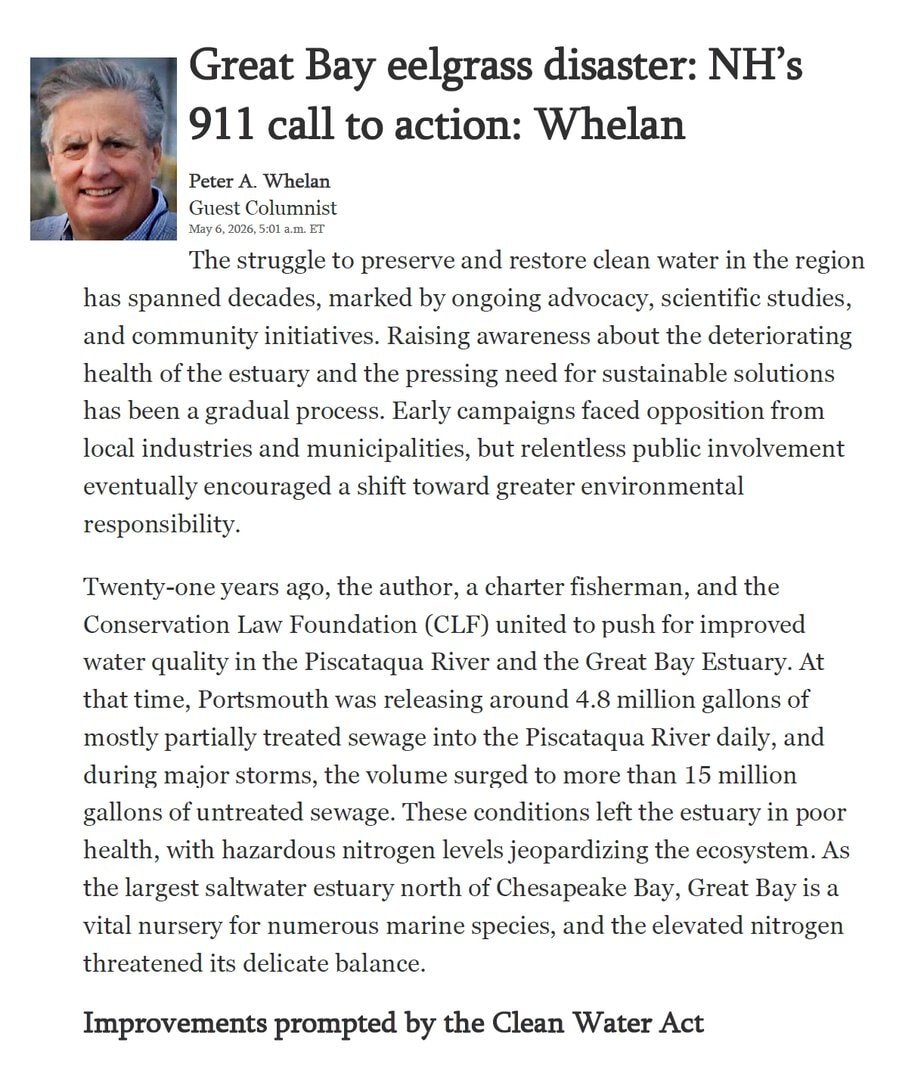
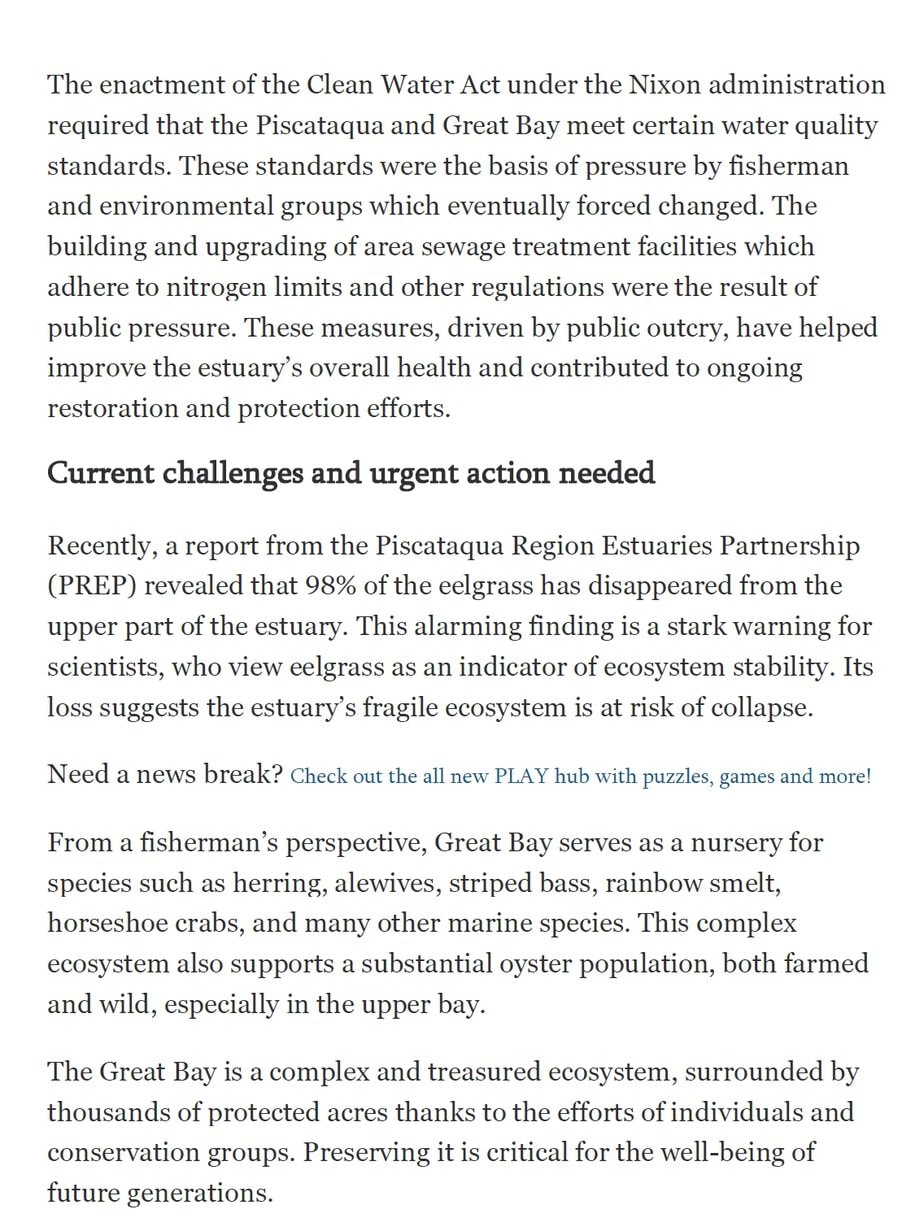
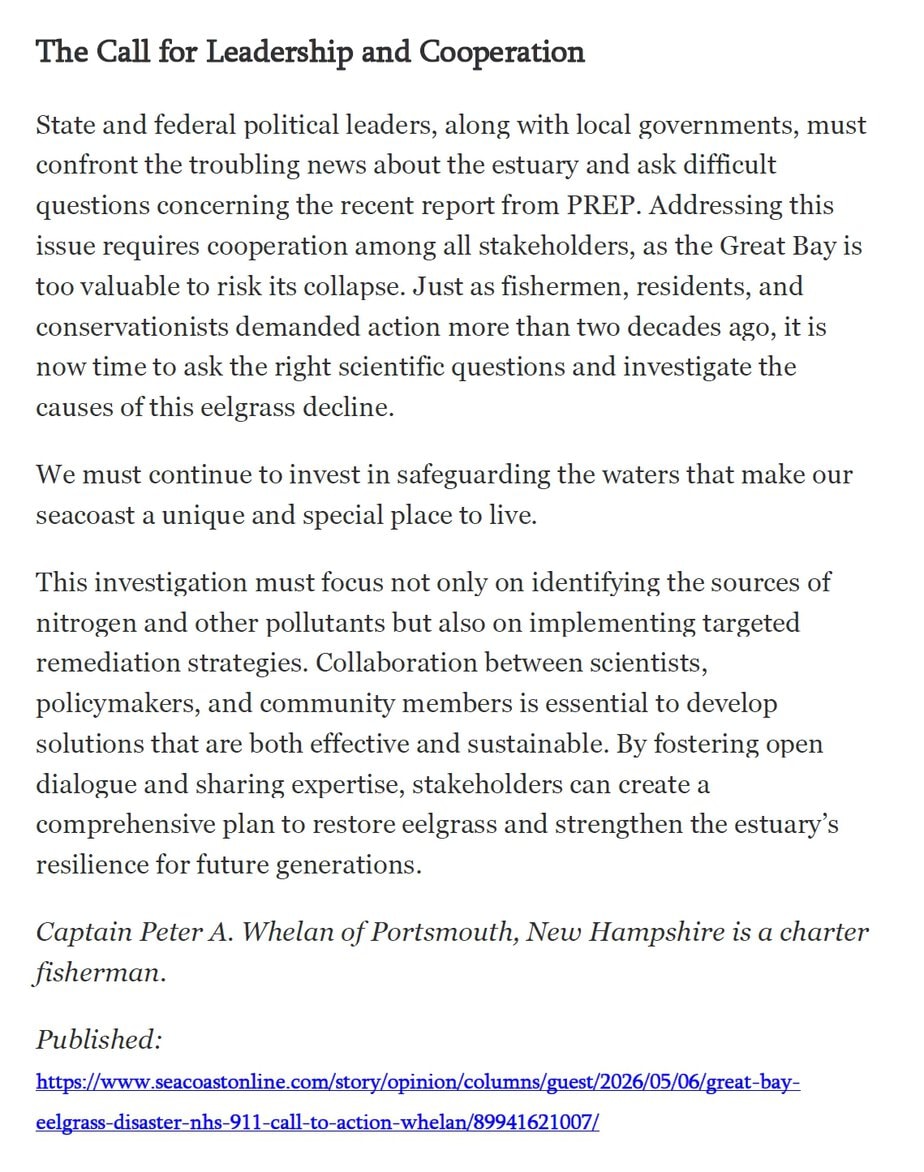
The Great Bay Estuary is one of the key saltwater estuaries north of Chesapeake Bay. It serves as a vital nursery for the very species that define our coastal waters and our passions—including striped bass, horseshoe crabs, rainbow smelt, herring, alewives, and an invaluable population of wild and farmed oysters. But a thriving marine nursery requires a healthy foundation, and in Great Bay as with other estuaries, that foundation is eelgrass.
Eelgrass acts as the primary indicator of our ecosystem’s stability. When it thrives, our fisheries thrive. When it disappears, the entire food chain faces the threat of collapse.
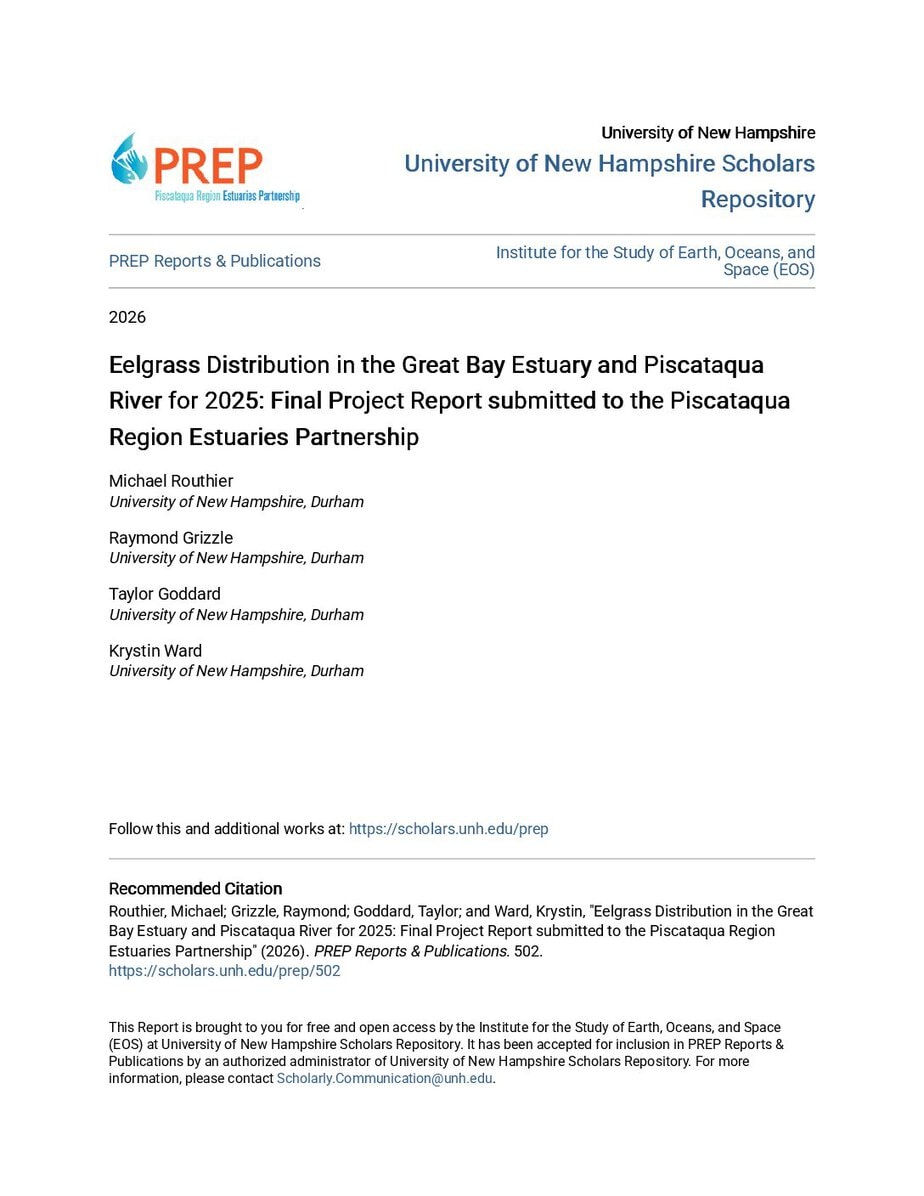
Recent data from the Piscataqua Region Estuaries Partnership (PREP) has delivered a stark warning: 98% of the eelgrass has vanished from the upper part of the estuary. While the factors causing eelgrass decline are complex and interrelated, the elevated level of nitrogen and other pollutants certainly jeopardize the delicate ecological balance.